A King’s Gambit

Mr. Jivani Goes to Washington
Ed Fast
In the first week of February, a relatively unknown Canadian politician made an unusual and, to many, unwelcome journey to Washington, D.C. Jamil Jivani, a backbench Member of Parliament, arrived in the American capital on what can only be described as a solo diplomatic mission — an effort, however improbable, to help arrest the rapid deterioration of the Canada–U.S. economic relationship.
From the outset, his initiative was treated with open skepticism, if not outright derision. The Carney government dismissed the trip as unhelpful and counterproductive. The Prime Minister himself publicly belittled the effort, noting pointedly that Mr. Jivani is neither Canada’s Minister of International Trade nor even the official Conservative critic for trade. It was not even clear whether Jivani’s trip had been formally blessed by his own party leader, Pierre Poilievre
In Ottawa, protocol still matters. Credentials still matter. Titles still matter. And Mr. Jivani arrived in Washington with none of the conventional ones.
His sole calling card was something else entirely: a long-standing personal friendship with U.S. Vice-President J.D. Vance and his wife, Usha — relationships forged years earlier when all were students at Yale University. In the formal world of diplomacy, this might seem thin gruel. In the world of Donald Trump’s Washington, it may be precisely the currency that counts.
What we do know is this: Mr. Jivani did, in fact, meet with Vice-President Vance. He apparently also met with Secretary of State Marco Rubio and U.S. Trade Representative Jamieson Greer — a courtesy rarely extended to visiting Canadian officials, let alone to an obscure parliamentarian
from north of the border. His itinerary reportedly included meetings with other American lawmakers and industry players as well.
These facts alone complicate the easy dismissal offered by the Carney government. Access matters. Relationships matter. And in an American administration that prizes loyalty, personal trust, and informal channels over bureaucratic orthodoxy, they may matter more than formal rank.
Canada’s relationship with the United States is not merely strained; it is drifting into something colder and more transactional than at any point in modern memory. The Trump Administration has made clear that sentimentality has no place in its worldview. Leverage does.
In that environment, insisting on diplomatic purity can become a form of self-indulgence. When traditional channels are blocked or ignored, unconventional ones deserve at least a hearing.
This is where Mr. Jivani’s gambit becomes interesting.
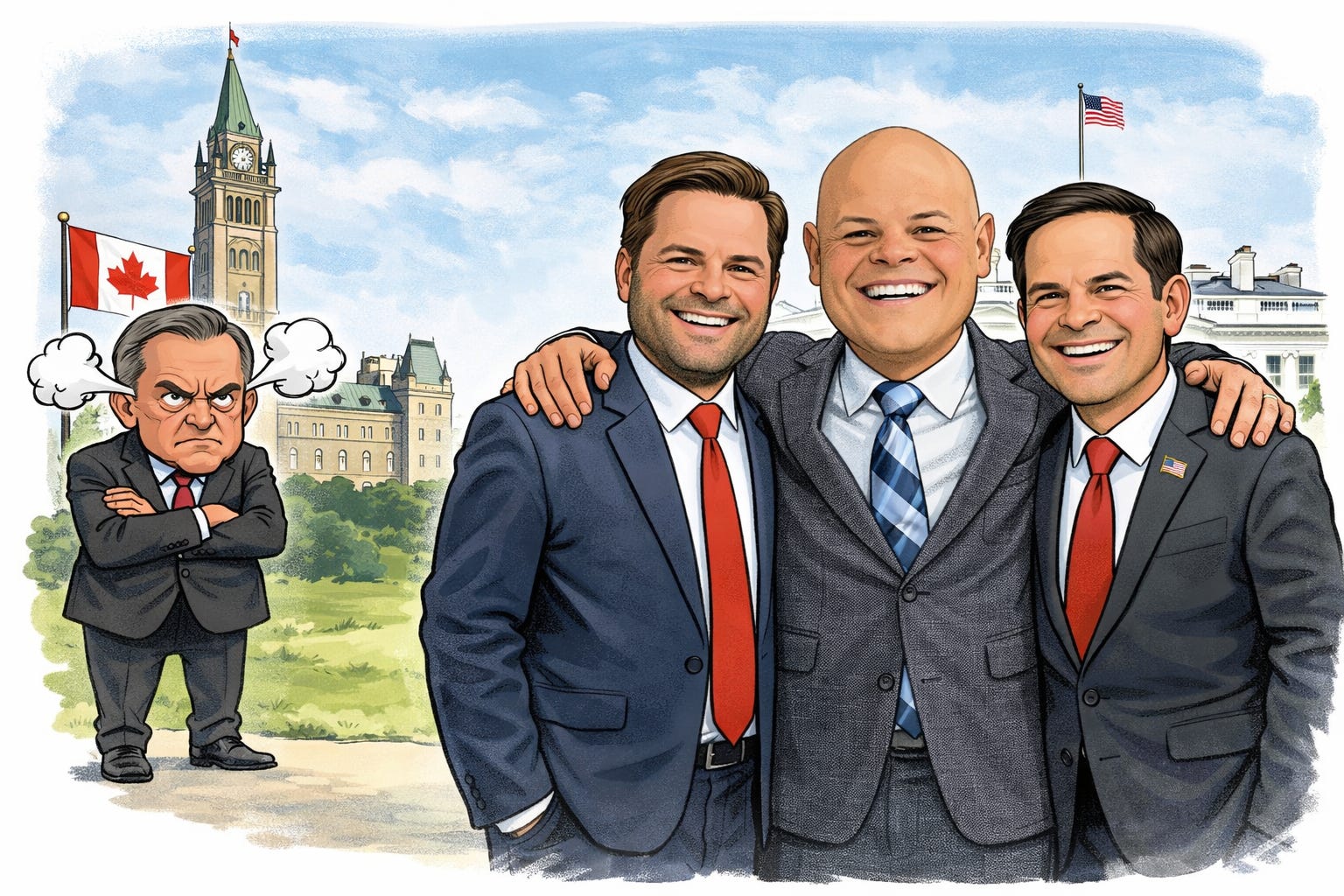
If his conversations amount to nothing more than polite exchanges and photo opportunities, the episode will soon be forgotten. But if even a small opening emerges — if lines of communication are softened, if misunderstandings are clarified, if American decision-makers begin to see Canada differently, perhaps it will have been worth it.
There is also a deeper question at play. Who, exactly, speaks for Canada when the relationship is in crisis? Is diplomacy the exclusive preserve of those with formal mandates, or is there room — especially in extraordinary circumstances — for private actors, parliamentarians, and trusted intermediaries to test the ice?
History suggests the latter. Backchannels have often played decisive roles when official relations freeze. They are risky. They are imperfect. But they are sometimes the only tools available.
Backchannel diplomacy works best when those engaging in it have the presumed authority, trust, and earned discretion to speak to, and for, both powers at the table. Mr. Jivani has a personal relationship with the Vice President, but if the Americans know that he doesn’t have the ability to speak for the PMO, nor the virtuous silence of quiet diplomacy, then his use as a backchannel is limited. But, Mr. Jivani is welcome in places that others are not, and that is important.
Critics will argue, not without reason, that freelance diplomacy risks mixed messages and undermines coherent national strategy. That concern should not be dismissed. But neither should the reality that Canada’s current strategy is producing diminishing returns. When the house is on fire, insisting that only the fire chief may carry water can look less like prudence and more like paralysis.
Mr. Jivani’s opening move is bold. A king’s gambit, by definition, is a calculated risk — an early sacrifice made in the hope of gaining initiative. It can fail spectacularly. It can leave the player exposed. Or, on rare occasions, it can reshape the board.
Only time will tell which outcome awaits this particular move.
What can be said already is that Mr. Jivani’s visit has exposed an uncomfortable truth about Canada’s position in Washington: access is no longer assured, familiarity no longer guarantees goodwill, and influence may come from unexpected places. If a little-known MP can secure meetings that elude seasoned officials, it says less about his audacity than about the changing nature of power in the American capital.
Perhaps his visit will come to nothing. Perhaps it will be quietly disowned by all sides. But perhaps — just perhaps — it will inject a small ray of hope into an otherwise bleak chapter in Canada–U.S. relations.
In a moment defined by frayed trust and hardened positions, even a gambit is better than stalemate.
The Hon. Ed Fast was Canada’s Minister of International Trade from 2011 to 2015, leading negotiations on free trade agreements with the European Union, the Trans-Pacific Partnership, Ukraine, and South Korea. He is presently a distinguished fellow with the MacDonald-Laurier Institute (MLI)/Center for North American Prosperity & Security (CNAPS).